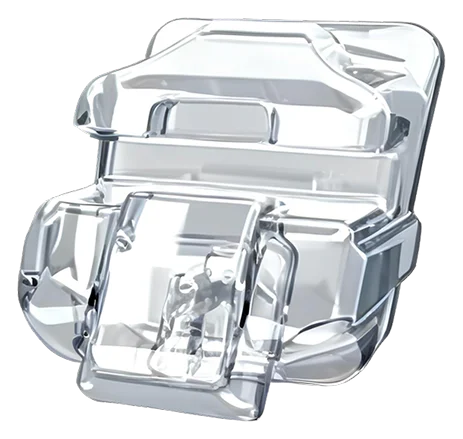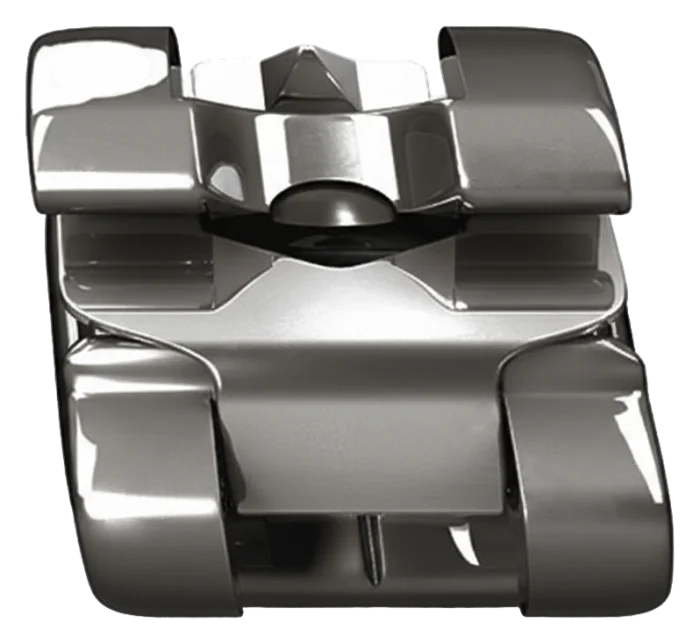
Metal braces in Yerevan
A durable fixed system for simple and complex bite problems. It does not break or deform and costs less than aesthetic braces or aligners.
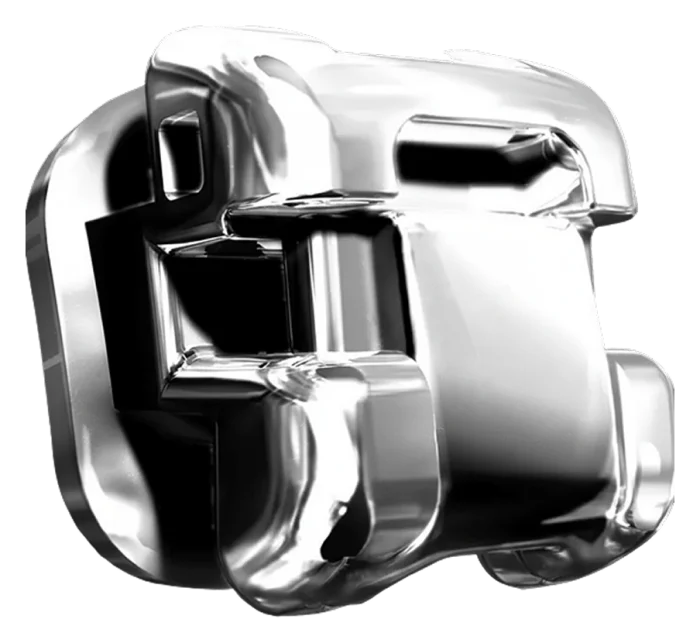
A metal brace system is a fixed appliance made of medical-grade steel bonded to the outer surface of the teeth. A shape-memory archwire runs through the bracket slots, applying constant gentle pressure so the teeth gradually move into the right position. At scheduled visits the orthodontist changes the wire to keep the force and direction optimal.
At iOrtho in Yerevan we primarily use modern self-ligating metal systems: the wire is held in tiny clips and slides freely in the slots. This lowers friction, reduces soreness and means fewer visits. In some cases we fit classic ligature braces, where the wire is held by elastic rings.
Metal braces suit teenagers and adults who put effectiveness and a sensible budget first and do not need to hide their treatment. On average the teeth reach their final position in about a year and a half — faster than with ceramic systems.
Benefits
Any level of complexity
They withstand heavy loads and handle severe crowding and a deep bite — cases where ceramics can struggle.
The most affordable
Simple, reliable mechanics with no premium for aesthetic materials or replacing broken brackets.
No breakage, no staining
Medical steel does not rust, react with acids or change its look over the whole treatment.
Rounded edges, low profile
Modern brackets are compact, irritate the lips and cheeks less and soon stop being noticed.
A visit every 4–6 weeks
Self-ligating clips need no frequent elastic changes — appointments are shorter and rarer.
Indications
- Distal, mesial, open, deep or cross bite
- Crowding — not enough room in the arch, teeth overlap
- Wide gaps between teeth, a gap between the central incisors
- Malpositioned individual teeth — outside the arch, rotated or strongly tilted
- Severe crowding and a heavy deep bite where ceramic systems are unsuitable
Treatment stages
- 1.
Orthodontist consultation
The doctor examines the mouth, assesses teeth and gums, determines the bite and checks contraindications. You learn the list of procedures and the cost.
- 2.
Diagnostics
CT of the jaws, a 3D scan and a photo protocol. The data shows root positions, bone condition and hidden inflammation that must be treated before bonding.
- 3.
Preparing the mouth
Professional hygiene, treatment of caries and gums and, where indicated, a decision on wisdom teeth.
- 4.
Bonding the braces
The enamel is cleaned and conditioned, each bracket is bonded in its calculated position, then the wire is placed. Usually one jaw first and the second 1–2 months later.
- 5.
Adjustments
Every 4–6 weeks the doctor changes the wires and, if needed, adds chains, springs or elastics.
- 6.
Removal and retention
The braces come off, the enamel is polished, a fixed retainer is bonded the same day and retention trays are made.
What's included
- The metal brace system
- Bonding and the first archwire
- An individual treatment plan based on the diagnostics
- Removal and enamel polishing
Prices
| Service | Price |
|---|---|
| Metal braces (one arch) | On request |
| Damon Q self-ligating braces (one arch) | On request |
| Scheduled visit (system activation) | On request |
| Braces removal and enamel polishing (one jaw) | On request |
Care rules
Hygiene
An orthodontic brush, interdental brushes and a water flosser after every meal; professional cleaning every 3–4 months.
Food
No whole nuts, crackers, hard candy, toffee or gum. Cut hard fruit and vegetables into small pieces.
Check-ups
Every 4–6 weeks — wire changes and activation. If elastics are prescribed, wear them as the doctor instructs.
If a bracket comes off
Do not try to fix it yourself — book an appointment with your doctor right away.
Questions and answers
Does bonding or removing braces hurt?
No. During bonding and removal you feel only light pressure. In the first days after bonding and after a wire change there may be some discomfort that quickly passes.
How long are metal braces worn?
On average 12 to 24 months, up to 3 years in complex cases. Metal works a little faster than ceramic. The doctor gives the exact time after diagnostics.
Can braces go on just one jaw?
Rarely. Bite problems almost always involve both jaws, even when the issue is visible on one. The orthodontist decides after diagnostics.
Do braces damage enamel?
Braces themselves do not. White spots around brackets appear only with poor hygiene. With proper care and regular professional cleaning the enamel stays healthy.
Book a consultation
Related services
Ceramic braces in Yerevan
An aesthetic solution matched to your enamel
Ceramic braces in YerevanSelf-ligating braces in Yerevan
New-generation ligature-free systems
Self-ligating braces in YerevanDamon Q braces in Yerevan
A modern approach to a straight smile
Damon Q braces in YerevanDamon Clear braces in Yerevan
A new level of aesthetics and comfort
Damon Clear braces in YerevanBraces for children in Yerevan
Effective bite correction for children and teenagers
Braces for children in Yerevan